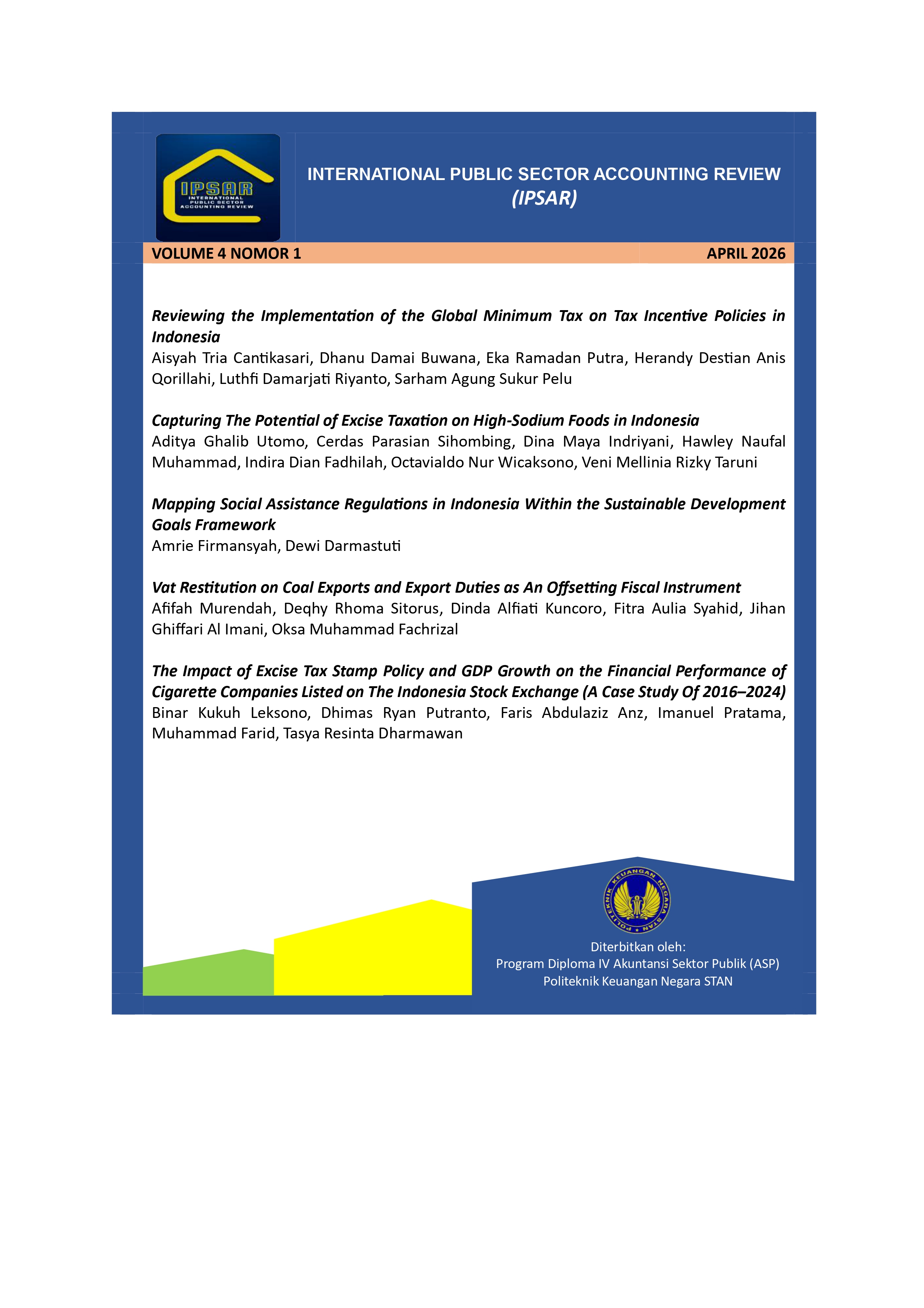
Reviewing the Implementation of the Global Minimum Tax on Tax Incentive Policies in Indonesia
DOI:
https://doi.org/10.31092/ipsar.v4i1.3902Keywords:
Effective Tax Rate, Global Minimum Tax, Tax Holiday EffectivenessAbstract
The implementation of the Global Minimum Tax (GMT) as part of BEPS 2.0 represents a significant change in the international taxation system. This study examines the implications of the Global Minimum Tax (GMT) on the effectiveness of tax holiday policies in Indonesia, particularly following the implementation of PMK 136/2024. Using a normative legal research method with statutory and conceptual approaches, this study evaluates the mechanisms of the Income Inclusion Rule (IIR) and the Qualified Domestic Minimum Top-up Tax (QDMTT), as well as their impact on the attractiveness of domestic fiscal incentives. The findings indicate that GMT has the potential to reduce the effectiveness of tax holidays when the Effective Tax Rate falls below 15%, thereby necessitating a redesign of incentive policies toward non-rate-based incentives. A comparative analysis with ASEAN countries reveals that regional policy responses are shifting from rate-based competition toward substance-based incentives. This study recommends the optimization of existing incentive instruments, namely investment allowance, research and development super deduction, and accelerated depreciation as alternatives that are more compatible with the GMT framework to maintain Indonesia's investment competitiveness.
Downloads
Published
How to Cite
Issue
Section
License
Copyright (c) 2026 Aisyah Tria Cantikasari, Dhanu Damai Buwana, Eka Ramadan Putra, Herandy Destian Anis Qorillahi, Luthfi Damarjati Riyanto, Sarham Agung Sukur Pelu

This work is licensed under a Creative Commons Attribution-ShareAlike 4.0 International License.
Creative Commons Attribution-ShareAlike 4.0 International
This license requires that reusers give credit to the creator. It allows reusers to distribute, remix, adapt, and build upon the material in any medium or format, even for commercial purposes. If others remix, adapt, or build upon the material, they must license the modified material under identical terms.