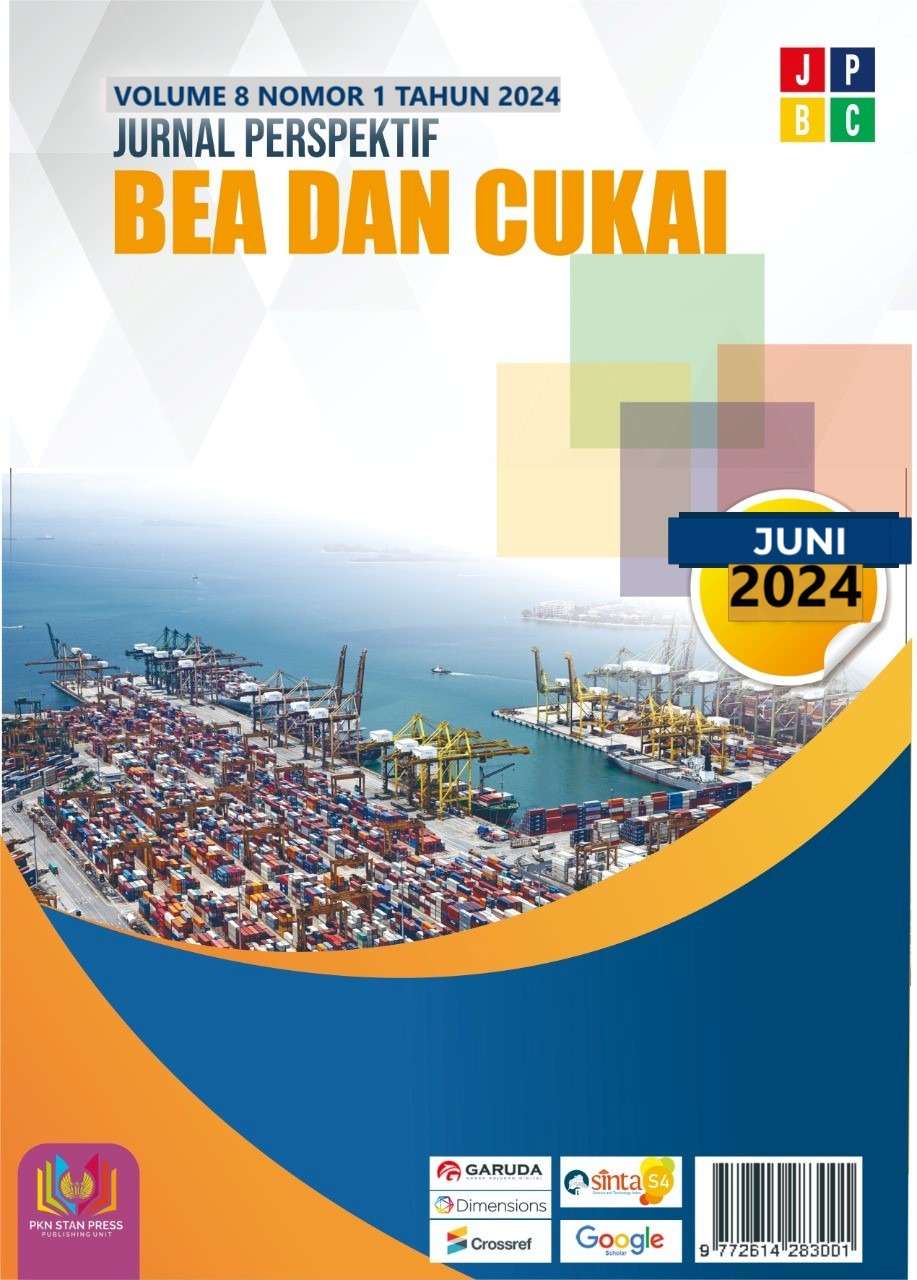
A STUDY OF DWELLING TIME AT TANJUNG PERAK HARBOR SURABAYA INDONESIA
DOI:
https://doi.org/10.31092/jpbc.v8i1.2631Abstract
The research aims to determine the factors that influence dwelling time at Indonesian ports so that the government can make policies for releasing imported goods at ports more quickly and efficiently. This study uses secondary data obtained from KPPBC TMP Tanjung Perak quantitative data in the form of monthly pre-clearance, customs clearance, post-clearance, and dwelling time processing times from January 2020 to December 2022. Statistical analysis using the linear regression method uses the application SPSS. Based on the results of the analysis of the factors that influence dwelling time, it is concluded that the pre-clearance, customs clearance, and post-clearance processes simultaneously have an influence on dwelling time at the port of Tanjung Perak. Meanwhile, partially, the pre-clearance and post-clearance processes have a positive and significant effect on dwelling time, while the customs clearance process does not affect dwelling time. Currently, the customs clearance process is faster due to new policies and improved facilities. This research only discusses the management of imported goods, so other research using export variables is needed to increase the accuracy and efficiency of government trade policies.
References
DJBC. (2019). Terus Pangkas Dwelling Time, Bea Cukai Tanjung Perak Dukung Peningkatan Impor Ekspor Jawa. Direktorat Jenderal Bea dan Cukai. Retrieved from https://www.beacukai.go.id/berita/terus-pangkas-dwelling-time-bea-cukai- tanjung-perak-dukung-peningkatan-impor-ekspor-jawa-timur.html. 18 December 2019.
Bahagia, I. S. N., Sandee, H., & Meeuws, R. (2013). State of Logistics Indonesia 2013.
Fadilah, Y. (2023). Analisis Risiko Untuk Pengawasan Impor Terkait Implementasi Kebijakan Post Border. Trade Policy Journal, 2(1), 65-70.
Ghazali, I. (2013). Aplikasi Analisis Multivariate dengan Program IBM SPSS 21 Update PLS Regresi. Semarang: Badan Penerbit Universitas Diponegoro.
Ghazali, I. (2016). Aplikasi Analisis Multivariete Dengan Program IBM SPSS 23. Semarang: Badan Penerbit Universitas Diponegoro.
Hendartono, A., & Widilestari, C. (2020). Dampak Dwelling Time Terhadap Layanan Ekspor Impor di Pelabuhan Tanjung Emas Semarang. Jurnal Maritim Polimarin, 6(2), 42-48.
Indonesia. (2006). Undang-Undang Nomor 17 Tahun 2006 tentang Kepabeanan.
Juliandi, A., Irfan, & Manurung, S. (2014). Metodologi Penelitian Bisnis Konsep dan Aplikasi. Medan: UMSU Press.
Kementerian Perdagangan Republik Indonesia. (2015). Laporan Analisa Kebijakan Impor di Negara Tujuan Ekspor. Jakarta: Sekretariat Direktorat Jenderal Perdagangan Luar Negeri.
Listiawati, R., Fauzan, T. M., & Ansori. (2021). Analisis Faktor-Faktor yang Mempengaruhi Dwelling Time Peti Kemas di Pelabuhan Tanjung Priok. Jurnal Akuntansi, Keuangan dan Perbankan, 9(1), 1-8.
Mankiw, N. G. (2020). Principles of economics. Cengage Learning.
Ministry of Finance official website. (2023). https://anggaran.kemenkeu.go.id/in/post/indeks-kinerja-logistik-indonesia-2023:-kinerja-kepabeanan-meningkat,-infrastruktur-terjaga,-layanan-distribusi-masih-tersendat-. Accessed March 29, 2024.
Ningsih, N. A., Rangkuti, S., & Zulkarnain, M. (2022). Pengaruh Kelengkapan Administrasi dan Kategori Importir Terhadap Dwelling Time pada PT Anugerah Indo Maritim Sejahtera Medan Belawan. Jurnal Emanis Fakultas Ekonomi dan Bisnis, 1(1), 55-68.
Nurminarsih, S., Rusdiansyah, A., Siswanto, N., & Gani, A. Z. (2015). Dynamic-inventory ship routing problem (D-ISRP) model considering port dwelling time information. Procedia Manufacturing, 4, 344-351.
Radifan, F. (2014). Faktor-Faktor yang Mempengaruhi Ekspor Crude Palm Oil Indonesia dalam Perdangan Internasional. Economics Development Analysis Journal 3 (2), 261-262.
Rafi, S., & Purwanto, B. (2016). Dwelling time management. Jurnal Manajemen Bisnis Transportasi Dan Logistik, 2(2), 220-228.
Refas, S., & Cantens, T. (2011). Why Does Cargo Spend Weeks in African Ports? The Case of Douala, Cameroon. The World Bank Africa Region Transport Department, 2-3.
Risa, M. (2018). Ekspor dan Impor. Sleman: Poliban Press.
Rusmiyanto, D., & Sumardiatna, I. K. (2021). Analisis Faktor-Faktor yang Mempengaruhi Lama Waktu Tunggu (Dwelling Time) Bongkar Muat di Pelabuhan Tanjung Emas Semarang. Majalah Ilmiah Gema Maritim, 23(1), 39-48.
Ruwantono, I. M., & Susatyo, N. W. (2016). Analisis Penyebab Tidak Tercapainya Target Dwelling Time Menggunakan Metode Fault Tree Analysis, Studi Kasus: Pelabuhan Tanjung Priok (Pelindo II). Program Studi Teknik Industri, Fakultas Teknik, Universitas Diponegoro Semarang, 1-8.
Safira, A., Buchari, E., & Kadarsah, E. (2020). Pre-Clearance Analysis on Dwelling Time for Imported Container (Case Study: Boom Baru Port). International Journal of Innovative Science and Research Technology, 5(7), 595-600.
Sanjaya, A. C., Njatrijani, R., & Saptono, H. (2017). Pelaksanaan Pengurusan Dokumen Tentang Impor Barang Terkait Dengan Dwelling Time di Pelabuhan Panjang Bandar Lampung. Diponegoro Law Journal, 6(2), 1-18.
Sekretariat Kabinet Republik Indonesia. (13 September 2016). Presiden Jokowi Minta Dwelling Time di Semua Pelabuhan Seperti di Priok 3,2 Hari. Retrieved from setkab.go.id: https://setkab.go.id/presiden-jokowi-minta-dwelling-time-di-semua-pelabuhan-seperti-di-priok-32-hari/
Sirajuddin, S. (2022). Five-key Strategies for Reducing Indonesia Ports’ Dwelling Time. Jurnal Teknik Industri, 22(2).
Sudarsono, D. P. (2022). Hasil Investigasi Ombudsman Indonesia Tentang Dwelling Time di Empat Pelabuhan Besar Indonesia. Binamulia Hukum, 11(1), 43-58.
Sugiyono. (2017). Metode Penelitian Kuantitatif, Kualitatif dan R&D. Bandung: Alfabeta. (Direktorat Jenderal Bea dan Cukai, 2019)
Sunarmin, Utami, N. S., & Yulianita, W. E. (2019). Analisis Efektivitas Penetapan Jalur Terkait dengan Dwelling Time di Kantor Pelayanan Utama Bea dan Cukai Tipe A Tanjung Priok. Jurnal Pajak Vokasi, 1(1), 57-69.
Supardi, E. (2017). Ekspor Impor. Sleman: Deepublish Publisher.
Supartini, S., Iswanto, I., Astriawati, N., Dekanawati, V., & Alfanzuri, N. K. H. (2022). Pelayanan Jasa Impor Barang Dalam Masa Pandemi. Dinamika Bahari, 3(2), 114-123.
Susilo, A. (2008). Buku Pintar Ekspor-Impor. Jakarta: Transmedia Pustaka.
Tandjung, M. (2011). Aspek dan Prosedur Ekspor Impor. Jakarta: Salemba Empat.
Tarigan, B., & Surbakti, M. S. (2019). Analisis Faktor-Faktor yang Mempengaruhi Dwelling Time Peti Kemas di Pelabuhan Belawan Medan. Departemen Teknik Sipil, Fakultas Teknik, Universitas Sumatera Utara, 1-11.
Utami, W. S. (2015). Percepatan Dwelling Time: Strategi Peningkatan Kinerja Perdagangan Internasional Pelabuhan Tanjung Priok. Jurnal Universitas Negeri Semarang, Economics Development Analysis Journal, 4(1), 82-90.
Yuliani, A. (2016). Evaluasi Penurunan Dwelling Time Menjadi Empat Hari di Pelabuhan Tanjung Priok. Warta Penelitian Perhubungan, 28(1), 57-70.
Downloads
Published
How to Cite
Issue
Section
License

This work is licensed under a Creative Commons Attribution-NonCommercial-ShareAlike 4.0 International License.
Authors who publish with this journal agree to the following terms:
- Authors retain copyright and grant the journal right of first publication with the work simultaneously licensed under a Creative Commons Attribution License that allows others to share the work with an acknowledgment of the work's authorship and initial publication in this journal.
- Authors can enter into separate, additional contractual arrangements for the non-exclusive distribution of the journal's published version of the work (e.g., post it to an institutional repository or publish it in a book), with an acknowledgment of its initial publication in this journal.
- Authors are permitted and encouraged to post their work online (e.g., in institutional repositories or on their website) before and during the submission process, as it can lead to productive exchanges, as well as earlier and greater citation of published work.